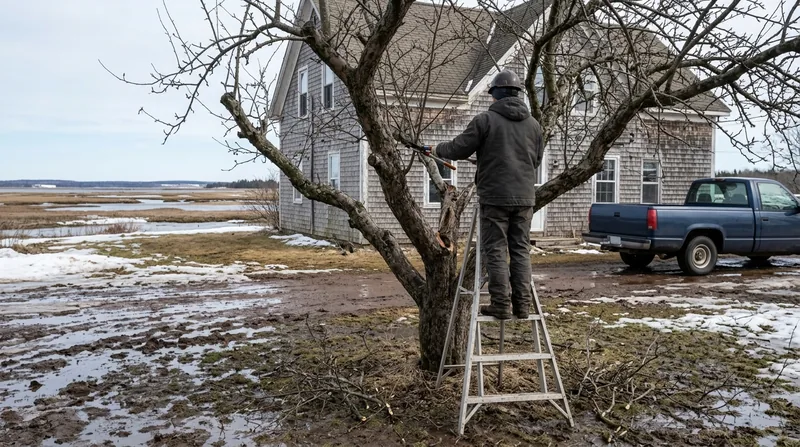




Fruit tree pruning in Moncton keeps apple, pear, plum and cherry trees productive, safe and within reach for harvest. The Moncton area's mature residential lots often feature fruit trees planted decades ago, now overgrown or neglected. Our ISA Certified Arborists prune for an open centre, remove water sprouts and crossing wood, and maintain fruiting branches at a height you can actually pick from. This work is best done during dormancy, from late fall through late winter, when the tree's structure is visible and healing is strongest. Whether your trees have been left to grow wild or simply need annual maintenance, we restore them to health and productivity.
Why fruit tree pruning matters in the Moncton area
Neglected fruit trees become dense, shaded and unproductive. Branches cross and rub, creating wounds and disease entry points. Water sprouts shoot vertically from the trunk and major limbs, wasting the tree's energy. Without pruning, you lose fruit, invite pest damage, and risk branch failure under ice or wind load. An open-centre structure lets light and air reach the inner canopy, where most fruiting occurs. Manageable height makes picking safe and practical, especially important on Moncton's many steep ravine lots where ladder placement is already tricky.
- Remove crossing and rubbing branches that wound each other and harbour disease.
- Clear water sprouts that drain energy from productive wood.
- Open the centre of the canopy to improve light penetration and air flow.
- Reduce overall height to a safe, harvestable range.
- Thin crowded fruiting branches so remaining fruit grows larger and ripens fully.
The result is a tree that produces more fruit, stays healthier, and is safer to work around.
Local example: An 8-year-old apple tree on a Moncton property had grown to 6 metres tall with dense interior shade. After dormant-season pruning, it produced three times the previous year's fruit, and picking no longer required a ladder. Pruning cost $275 and took one day.
How we prune fruit trees in the Moncton area
We assess the tree's age, species, current structure and fruiting pattern before making the first cut. Apple and pear trees tolerate aggressive open-centre pruning. Plum and cherry trees need lighter handling to avoid sunscald on newly exposed wood. We work systematically from the ground up, removing the largest branches first and stepping back frequently to check balance and structure. All cuts are made just outside the branch collar, where the tree's own healing chemistry is strongest. Debris is chipped on site or hauled away, leaving your property clean.
- Identify and remove any dead, diseased or crossing branches first.
- Cut out water sprouts and suckers at their base or point of origin.
- Thin crowded fruiting wood to open the centre to sunlight.
- Reduce height by cutting back to outward-facing buds or lateral branches.
- Make all cuts just outside the branch collar for optimal healing.
- Chip or remove all debris before we leave the property.
Proper pruning technique speeds healing and reduces disease risk; improper cuts can create large wounds that invite rot and pest damage.
Moncton example: A 12-year-old pear tree in the Old West End had become 7.5 metres tall with fruit forming only at the top. We opened the centre, reduced height to 4.5 metres, and thinned competing branches. Pear production returned to the lower limbs within two seasons. Cost was $350 for a half-day job.
Pruning methods and timing
| Method | Best use | Timing |
|---|---|---|
| Open-centre pruning | Apple and pear trees; removes competing central leaders and opens canopy to light | Late fall to late winter (dormancy) |
| Thinning cuts | All fruit trees; removes entire branches at the collar to reduce crowding and improve structure | Late fall to late winter (dormancy) |
| Heading back | Plum and cherry trees; shortens branches to outward buds to reduce height safely | Late fall to late winter (dormancy) |
| Water sprout removal | All species; cuts vertical shoots at base or point of origin to direct energy to fruit | Late fall to late winter; summer removal if urgent |
Dormant-season pruning (late fall to late winter) is standard because the tree's structure is fully visible, healing is strong, and disease pressure is lowest. Summer pruning is avoided because fresh cuts attract insects and the tree is already stressed by fruit production.
Permits and clean-up
Fruit tree pruning on your own property does not normally require a municipal permit in Moncton, since it is routine maintenance of a mature tree. However, if the work involves removing large branches or significantly altering the tree's structure, or if your property is in a heritage district, it is wise to check with the City of Moncton before starting. We document the work and can provide photos if you need them for your records. All pruning debris is chipped on site or hauled away in our trucks, leaving your property clean and ready to enjoy the results. We respect property lines and do not encroach on neighbours' land.
For more information on general tree pruning services, or to discuss your specific trees, call us at (506) 805-0418 or request a free estimate. If you have dead wood or storm damage to address alongside pruning, we also offer deadwood and branch removal. For trees showing signs of disease or pest damage, an arborist diagnosis can help determine whether pruning alone will restore health or if further treatment is needed.
Prices Fruit Tree Pruning in Moncton — Indicative pricing
| Service | Price | Details |
|---|---|---|
| Small fruit tree pruning (up to 4 metres tall) | From $150 | Apple, pear, plum or cherry; open-centre structure; includes cleanup |
| Medium fruit tree pruning (4 to 6 metres tall) | From $275 | More extensive thinning and height reduction; single tree |
| Large or multiple trees | From $400 | Trees over 6 metres or three or more trees on one property |
| Emergency or same-day pruning | Quoted on call | Storm damage or urgent health risk; (506) 805-0418 |
| Free estimate | Included | Site visit, assessment and written quote; no obligation |
Indicative prices; free, personalized estimate within 24h at (506) 805-0418.