



Tree disease diagnosis is a critical first step when you notice signs of decline in your maples, oaks, ash or other mature trees across the Moncton area. Our ISA Certified Arborists inspect the crown, trunk, root flare and surrounding soil to identify decay fungi, cankers, boring insects and root problems, then provide a written recommendation: treat, prune or remove. in Moncton and the surrounding area's freeze-thaw cycles, heavy clay soils and dense residential neighbourhoods create ideal conditions for disease pressure, and early detection often means the difference between saving a tree and losing it. We serve Moncton, Riverview, Tantramar and the surrounding municipalities with the expertise to guide you through treatment or removal decisions, and to support any permit application the City of Moncton may require.
Why tree disease diagnosis matters in Moncton
Diseased trees pose real risks: they can fail suddenly, damage property, or spread infection to neighbouring trees. In post-war subdivisions and ravine lots across Moncton, mature trees stand close to houses, power lines and fences, making early diagnosis essential. A single diseased ash, oak or maple can decline rapidly once the emerald ash borer, root rot or canker takes hold, and by the time you see obvious symptoms, treatment options may be limited. Our arborist inspection catches problems early, identifies the specific pathogen or pest, and recommends the most cost-effective path forward.
- We document crown thinning, branch dieback and unusual leaf colour or timing.
- We probe the trunk and root flare for soft wood, oozing cankers and entry holes.
- We assess soil compaction, root girdling and water stress around the base.
- We identify specific fungi, insects or environmental stress causing decline.
- We provide a written report with treatment, pruning or removal recommendations.
Early diagnosis often saves money and preserves landscape value. A tree treated for early canker or pest infestation may recover; a tree left untreated until failure is a safety and removal crisis.
Key fact: In Moncton and the surrounding area, freeze-thaw damage and root rot from poor drainage affect 30 to 40 percent of mature trees on residential lots. An early diagnosis can prevent costly removal and preserve mature shade.
How we diagnose tree disease
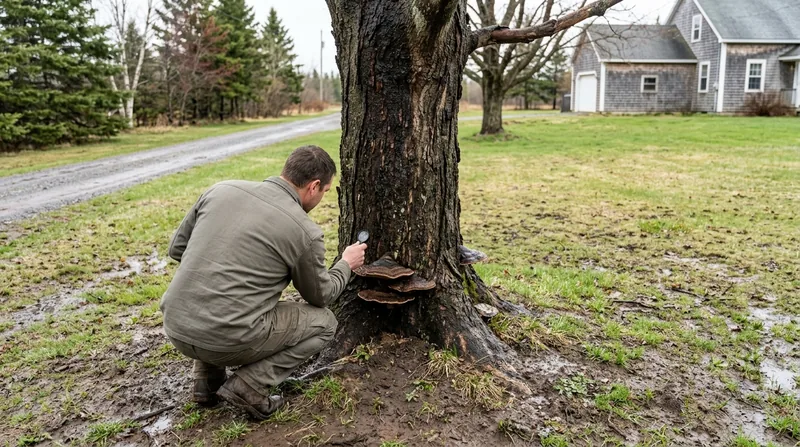
Our inspection process is hands-on and thorough. We arrive with binoculars, increment borers, soil probes and a trained eye for the signs of decay, pest activity and environmental stress. We examine every part of the tree and its immediate surroundings, photograph key findings, and return with a detailed written report within two business days. This report supports your insurance claim if damage is involved, and it also supports any permit application if the City of Moncton requires one for removal or major pruning.
- We climb or use a lift to inspect the upper crown and branch structure.
- We use an increment borer or sonic tomography to assess internal wood condition.
- We examine the root collar and surrounding soil for decay fungi and girdling roots.
- We identify the specific disease, pest or environmental cause of decline.
- We recommend treatment (fungicide, pest injection, drainage), pruning (removal of dead wood or structural support), or removal and stump grinding.
- We provide a cost estimate for any recommended action and contact information to proceed.
The entire inspection typically takes 30 to 45 minutes per tree. We photograph findings and email a draft summary the same day, with a formal written report delivered within 48 hours. If you need to apply for a permit or file an insurance claim, this report is your key document.
Real example: A homeowner in the West End noticed a Norway spruce losing branches and oozing resin. Our diagnosis identified root rot from poor drainage. We recommended soil amendment and crown pruning to reduce stress, followed by annual monitoring. The tree recovered and is still standing five years later. Without that early diagnosis, removal would have cost $2,200 and required stump grinding.
Common diseases and pests we diagnose in the Moncton area
in Moncton and the surrounding area's climate and soils create a distinct disease and pest profile. Maples and oaks are prone to canker and root rot; ash trees face the emerald ash borer threat; birch and spruce suffer from weather damage and fungal infections. We recognise all major pathogens and can recommend appropriate action, from emerald ash borer treatment to tree removal and stump grinding.
- Emerald ash borer attacks all ash species and requires proactive injection or removal before the tree fails.
- Root rot (Armillaria, Heterobasidion) causes slow decline, especially in wet soils or compacted sites.
- Cankers (Nectria, Cytospora) girdle branches and trunks, causing dieback and structural weakness.
- Anthracnose and other leaf diseases weaken trees during wet springs and reduce recovery capacity.
- Environmental stress (compaction, poor drainage, salt spray, storm damage) predisposes trees to secondary pest attack.
Many of these conditions are treatable if caught early. Our diagnosis tells you which trees can be saved and which should be removed to protect the rest of your landscape.
Diagnosis and local permitting
The City of Moncton may require a permit for a private tree removal, and an arborist report is normally the supporting document for that application. Our written diagnosis and recommendation provide the technical basis for your permit request, and they also help the City understand why removal or major pruning is necessary. We are familiar with Moncton's process and can advise you on timing and documentation. Permit requirements and approval timelines vary across the surrounding municipalities, so we always clarify the local rules before you proceed.
If your tree is near NB Power lines, we also assess clearance and risk. We never work on the public distribution network, but we can advise whether the tree should be referred to NB Power or whether our utility line clearance service can safely manage the risk on your property.
Diagnosis methods and tools
| Method | What it reveals | When we use it |
|---|---|---|
| Visual inspection and binoculars | Crown density, branch dieback, cankers, pest entry holes, bark damage. | Every inspection; fastest way to spot obvious decline and pest activity. |
| Increment boring | Internal wood condition, rate of decay, presence of discoloured or soft wood. | When internal rot or canker is suspected; minimal damage to the tree. |
| Soil probe and root collar examination | Root rot, girdling roots, soil compaction, drainage problems. | When decline is slow or tree is in wet or compacted site; critical for ravine lots. |
| Sonic tomography (if needed) | High-resolution map of wood decay inside the trunk; structural risk assessment. | For large, valuable trees where internal decay is suspected and treatment or removal cost is high. |
We use the appropriate tools for each tree. A simple visual inspection may be enough for a small ornamental; a large street tree or heritage specimen may warrant increment boring or sonic tomography to justify treatment or removal cost.
Next steps after diagnosis
Once we deliver your report, you have clear options. If treatment is recommended, we can schedule tree pruning, fungicide injection, or soil amendment. If removal is the best choice, we handle tree removal and full stump and root removal in the same visit. If you want a second opinion or need to support a permit application, our report stands as a professional document. Contact us at (506) 805-0418 to schedule your free estimate, or visit our contact page to request an inspection.
Prices Tree Disease Diagnosis in Moncton — Indicative pricing
| Service | Price | Details |
|---|---|---|
| Tree disease diagnosis and written report | From $175 | Single tree inspection, visual assessment, increment boring if needed, written recommendation for treatment or removal |
| Multiple trees or complex site assessment | From $275 | Two to four trees, soil and drainage evaluation, detailed report with phased treatment plan |
| Sonic tomography (advanced internal decay mapping) | From $400 | High-resolution wood decay assessment for large or valuable trees; supports structural risk decisions |
| Arborist report for permit application | From $225 | Formal report with photographs and recommendations, formatted to support City of Moncton or municipal permit request |
| Travel and site visit | Included | No charge for the inspection visit in Moncton and the surrounding area. |
| Free estimate | Free | Call (506) 805-0418 or use our contact form; response within 24 hours |
Indicative prices; free, personalized estimate within 24h at (506) 805-0418.