Understanding Storm Risk to Moncton Trees
Atlantic Canada's storm season brings real danger to residential and commercial properties across Moncton. Nor'easters and post-tropical storms deliver sustained high winds, heavy precipitation, and rapid pressure changes that stress tree structures. When a tree fails during a storm, the consequences can be severe: property damage, injury, loss of utility service, or blocked roadways. Understanding how these weather systems affect your trees is the first step towards protecting your home and neighbourhood.
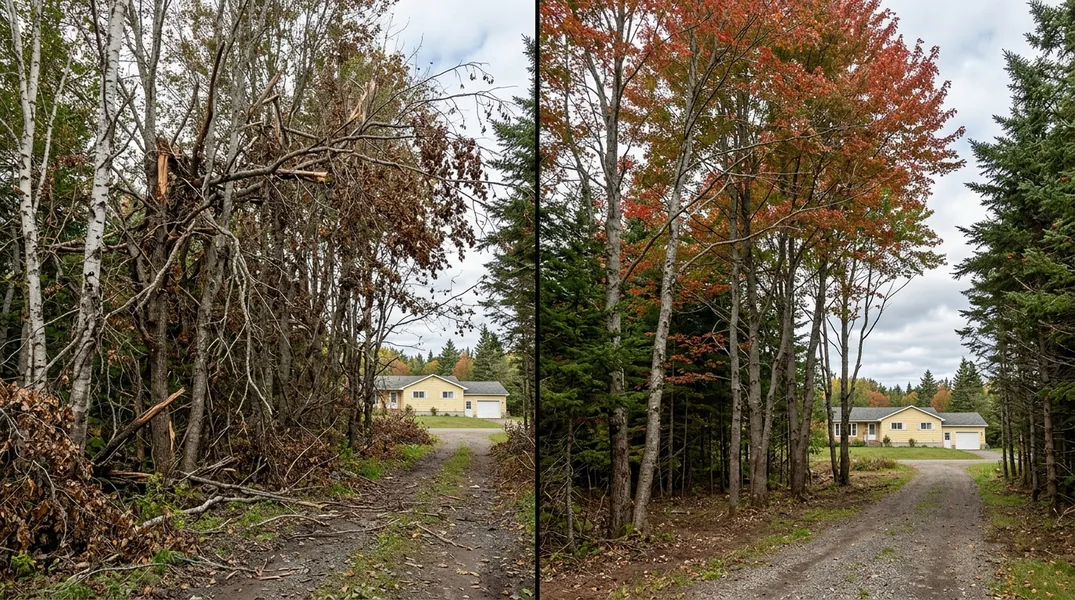
Trees that appear healthy on a calm day may harbour hidden structural weaknesses. Included bark, co-dominant stems, decay cavities, and root compromise are invisible to the untrained eye but become critical failure points under wind load. A tree that has survived twenty years of winters may fail in a single night if internal decay or poor branch architecture has gone unaddressed. This is why property owners in Moncton should not wait until storm warnings are issued to evaluate their trees. Proactive assessment and maintenance during the quieter months of spring and early autumn offer the best protection.
The Role of Preventive Pruning Before Storm Season
Tree Pruning is not a cosmetic service; it is a structural investment that reduces wind resistance and redistributes weight more evenly through the canopy and stem. Proper pruning removes dead wood, which is the first failure point in a storm. It also eliminates crossing or rubbing branches that weaken each other, and it reduces the sail effect of dense foliage that catches wind like a sail on a ship. When performed by an experienced arborist, pruning improves air flow through the crown, which also reduces the risk of fungal disease and pest colonization during wet autumn weather.
The timing of pruning matters. Late winter and early spring are ideal for most deciduous trees because wounds compartmentalize quickly as growth resumes. For evergreens such as spruce, pruning in late summer allows wounds to harden before winter stress arrives. Hub City Tree Trimming recommends scheduling a professional assessment in July or August so that any necessary work can be completed before September and October, when Atlantic storm systems become most active. This proactive approach, combined with proper technique, can reduce the likelihood of storm damage by 40 to 60 percent, depending on the tree's initial condition and structure.
Hazard Tree Assessment and Early Detection
A hazard tree assessment is a systematic evaluation performed by a certified arborist to identify trees that pose an elevated risk to people, structures, or utilities. The assessment examines trunk condition, branch attachment angles, root collar integrity, signs of decay or pest damage, and lean or asymmetry. For properties in Moncton, this service is especially valuable because it provides a prioritized action plan and generates documentation that supports permit applications with the City of Moncton, should removal become necessary.
Common hazard indicators include large dead branches in the crown, cavities or hollow sections in the trunk, mushroom fruiting bodies (a sign of active decay), root plate heaving, or a pronounced lean away from the direction of prevailing winds. Uprooted spruce trees are particularly common in post-tropical storms because their shallow root systems do not anchor as deeply as hardwoods, and their dense canopy catches significant wind force. An arborist report will also note whether a tree is a candidate for tree trimming to reduce risk, or whether removal is the safer option. This assessment transforms uncertainty into actionable information and can prevent costly emergency calls after a storm has already caused damage.
When Storm Damage Occurs: Emergency Response
Despite the best preventive efforts, severe storms can still cause damage. A tree may fall on a house, block a driveway, damage a garage, or bring down power lines. In these situations, property owners need immediate, professional help. 24/7 Emergency Tree Removal services are essential because a fallen tree creates safety hazards, blocks access, and may pose ongoing risk if additional branches are unstable or if the root plate is partially lifted.
Hub City Tree Trimming responds to emergency calls around the clock during and after major storms. Our crews arrive equipped to safely dismantle large fallen trees, clear debris, and remove hazardous hanging branches. We carry full liability insurance and follow industry safety standards (ANSI A300) to protect both your property and our personnel. If you experience a tree emergency in Moncton, call (506) 805-0418 immediately. We will assess the situation, provide a damage estimate, and begin work as soon as conditions allow. Fast response also minimizes secondary damage, such as rot that sets in when a fallen tree lies on a roof or deck for days.
Tree Removal and Post-Storm Recovery
Not every storm-damaged tree can be saved. If a tree has split down the trunk, lost more than 50 per cent of its crown, or is leaning at an extreme angle with compromised roots, Tree Removal is often the safest and most economical choice. Attempting to prune or brace a severely damaged tree can prolong the risk and delay recovery of your property. Professional removal is also necessary if a tree has fallen across structures, utilities, or access routes.
After removal, Hub City Tree Trimming manages debris cleanup, stump grinding if desired, and site restoration. We chip larger branches and logs for mulch or disposal, leaving your property clear and safe. Many property owners use this opportunity to replant with species better suited to storm exposure, such as native hardwoods with deeper root systems and more flexible wood. Our team can advise on species selection and planting location to minimize future risk while maintaining the shade and privacy your property needs.
Preparing Your Property Now: A Storm-Ready Checklist
The best time to prepare for storm season is now, during the calm months of late summer and early autumn. Start by walking your property and identifying trees that overhang structures, lean noticeably, or show obvious signs of damage or disease. Take photographs and note the location and size of each tree of concern. Then contact Hub City Tree Trimming for a free estimate and professional assessment. We will evaluate each tree, recommend pruning or removal, and provide a clear timeline and cost breakdown so you can plan ahead.
Secure your roof gutters and downspouts to ensure water drains away from the foundation, reducing soil saturation and root stress during heavy rain. Remove dead branches from over walkways, parked vehicles, and outdoor seating areas. If you have large evergreens such as spruce near the house, consider light pruning to reduce wind sail and improve structure. Store loose outdoor items, secure trash cans, and trim back any climbing vines from siding or roof edges. These simple steps, combined with professional tree assessment and pruning, will significantly reduce your exposure to storm damage. For a detailed evaluation and a custom plan for your property, contact us at (506) 805-0418 or request a free quote on our website.
Looking for a professional in Moncton? Hub City Tree Trimming responds quickly for all your tree trimming needs.
Get a free estimateOur services : Tree Removal · Tree Trimming · Tree Pruning